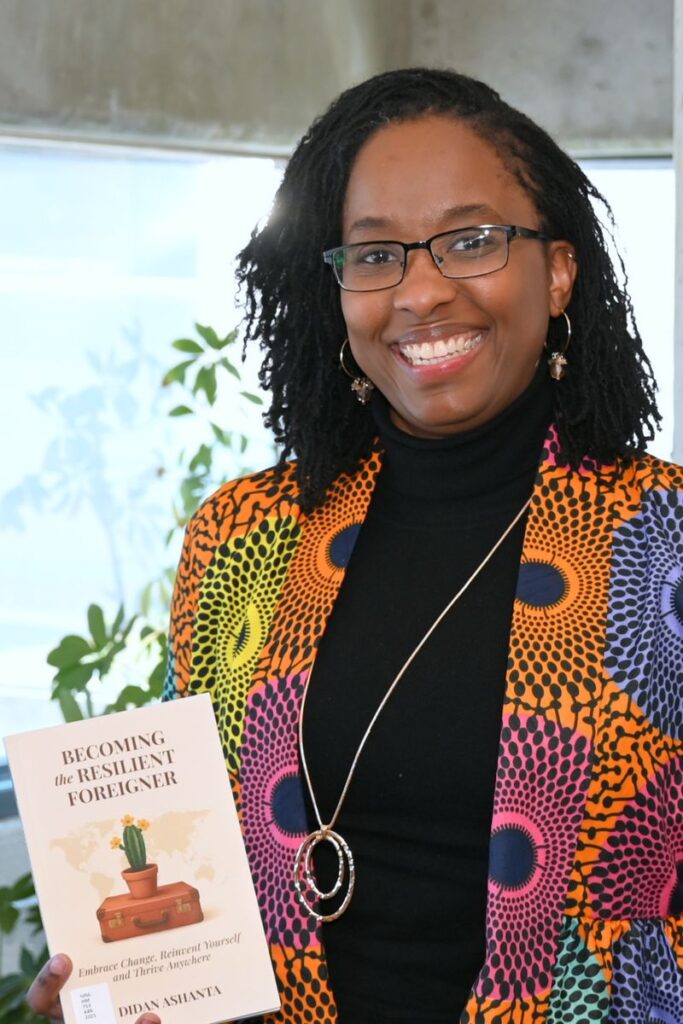
Black Community Engagement Person of the Month – Didan Ashanta Wedderburn
Didan is an inspiring and engaging speaker with 20+ years of experience in social integration and resilience cultivation. She is passionate about equipping foreign workers and foreign students to conquer migration stress by nurturing the skills and habits they need to thrive in their host countries. Didan is also the founder of the Resilient Foreigner consultancy and host of The Didan Ashanta podcast.
On Roots, Lived Experience and Motivation
Q: Can you share a bit about yourself and your roots? Does it have any influence on the work you do today?
A: I grew up in Portmore, Jamaica in a family of entrepreneurs and community builders. Most of our free time was spent in service and engaging with our communities and the less fortunate. Self-sufficiency and civic responsibility were lived out before I ever learned those terms. So, my lifestyle and work today are a reflection of the values and norms I grew up with.
Q: How did you first become involved in the work you are doing now? What drives your daily commitment to Resilient Foreigner? Are there particular community needs or personal experiences that have shaped your focus?
A: I grew up with family members who travelled to either study, work or settle in places like Venezuela, Switzerland, Mauritius, Turks and Caicos Islands, Mexico and Sint Maarten. I had pen pals in Finland, France and Australia. My teachers took me on trips to Indonesia and Northern Ireland. I always wanted to see the world, and learned from globetrotters, anthropologists, and social psychologists. But it wasn’t until other foreign professionals started asking for my advice that I realized that adapting to new environments is overwhelmingly stressful for most people. I work with many internationally trained people who are struggling with migration stress. I help them to regain their confidence, build a supportive community in the new country, and chart a path towards a better life abroad.
On Reflection and Vision
Q: What challenges or resistance have you encountered on your journey? How did you navigate such setbacks/resistance?
A: Like many other foreign professionals, I have dealt with different types of crises while living abroad, including death, divorce and natural disasters. While each devastating experience will hit you in a different way, my strategies for bouncing back will always include wellness routines and supportive relationships.
Q: What change are you hoping to create through The Resilient Foreigner and your involvement in community work in the spaces you occupy?
A: Through my consultancy, Resilient Foreigner, I want to equip foreign professionals to rebuild their lives in a way that: (a) gets them recognition for the value they bring to their host countries, (b) brings them support in both their personal and professional lives, and (c) allows them to enjoy success wherever they call ‘home’.
Q: Can you share a moment when you realized The Resilient Foreigner made a significant difference?
A: Shortly after I published Becoming the Resilient Foreigner, I started receiving feedback. I got text messages and voice notes. I saw them posted in online communities and on Amazon reviews. As I listened and read their reactions, I realized that people got it. They got my message and they could relate to the stories and struggles I shared in the book. Now, I am creating an online community where readers can connect with like-minded people, and benefit from my mentorship as they implement the strategies, they are learning, without having to figure it out on their own.
Q: Have there been any unexpected successes or breakthroughs?
A: I never expected program developers and executive coaches to adopt Becoming the Resilient Foreigner as a reference tool when working with their internationally trained clients. But they are, and I think it’s a great way to use it.
On Future and Legacy
Q: How do you define meaningful change first in the Black community in NL, and then the broader NL community?
A: Marcus Garvey was Jamaica’s first national hero and he said, “A people without knowledge of their past history, origin and culture is like a tree without roots”. So, meaningful change should involve African-affirming learning spaces for our children. We already have various cultural exchange experiences that allow us to share and celebrate the cuisines, music and esthetics of African, Caribbean and Black Canadian communities in NL. But we also need more effort to pass on knowledge of our ancient civilizations, our significant achievements in STEM (Science, Technology, Engineering and Math), and the value systems that empower us to excel even when we face injustice.
Q: What advice would you offer to others who want to get involved in the co-creation of an Ubuntu community?
A: Be willing to contribute your knowledge, skills and experience towards the advancement of our society, and be eager to learn from others. As we give, we gain, and we grow together.
Q: What kind of legacy do you hope to leave behind?
A: I want each person to become more self-confident and to become a better community-builder after they have been influenced by me. Each of us can bring a little more joy to everyday life if we build our communities together.